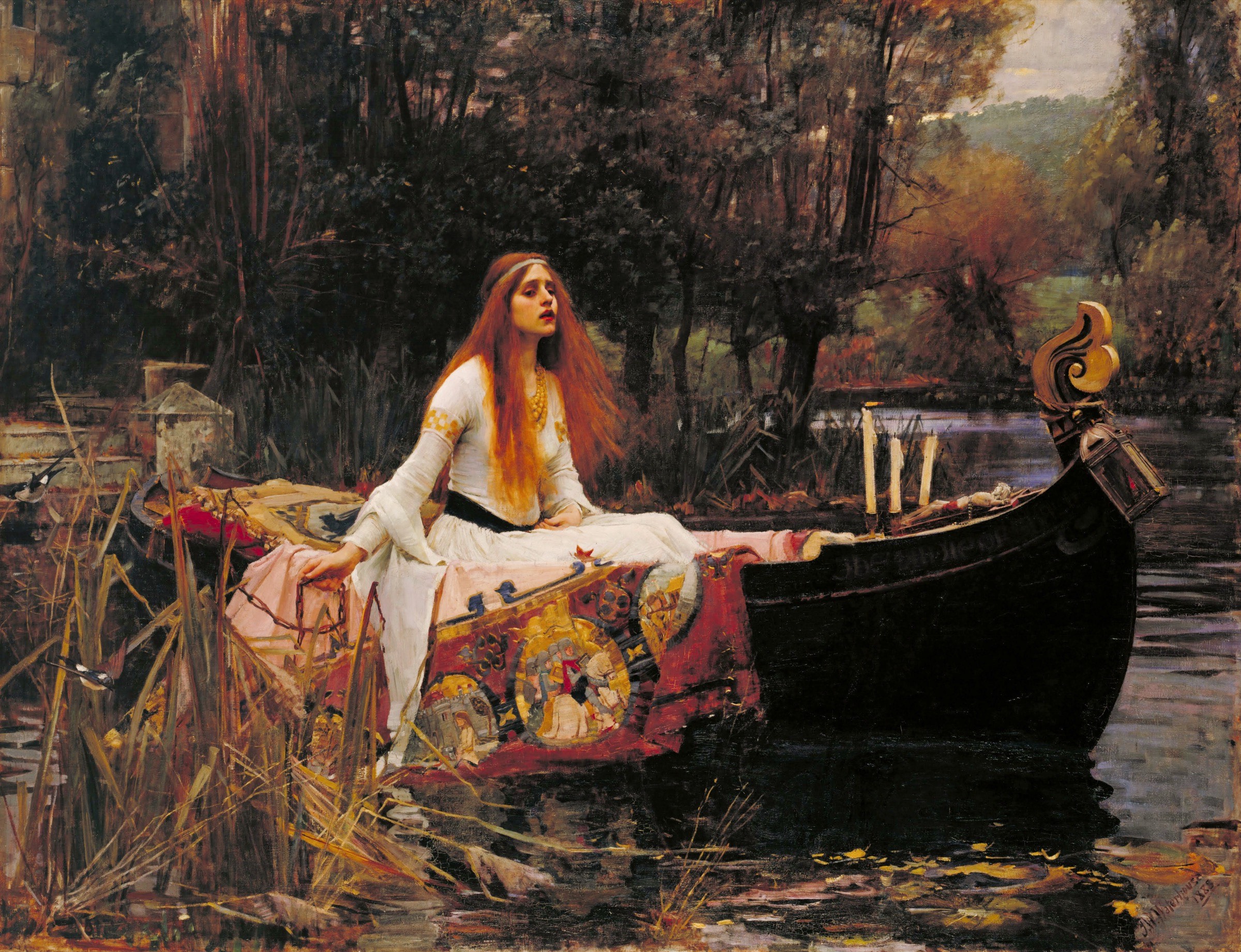
For most of us, poetry was not a wide and velvety ribbon draped through our childhood. It rarely wove itself into the fabric of daily life. Beyond a handful of Mother Goose rhymes or the occasional singsong verse in elementary school, poetry often remained absent—even into adulthood. For many, it existed only as something assigned in literature class: dense, intimidating lines to be decoded for a test rather than savored as living language.
It is understandable, then, that many people find it difficult at first to love poetry. The language can feel unfamiliar, the rhythms strange, and the meanings elusive. What begins as frustration or indifference may even deepen into active resistance. Yet with patient perseverance—reading slowly, rereading aloud, and allowing time for the ear and heart to adjust—poetry often reveals itself as something quite special. What once felt like an obstacle gradually becomes a beloved companion, offering depths of beauty, insight, and solace that repay every effort invested. Many who once avoided it eventually come to cherish it as one of life's quiet, enduring joys.
As a child, I was one of the many. The first time I remember hearing Shakespeare's name, I was in ninth grade. The teacher who introduced us to the Bard had no real love for his work, and her indifference quickly spread throughout the entire class. I had no idea I was listening to a master who had permanently transformed the English language.
It was only over the past ten years or so that I learned to love poetry. It didn't happen naturally—it was a deliberate process. I had to choose to open that first collection. I had to read each poem again and again, morning after morning, until the rhythms began to settle in my ear and the words found their way into my heart. I did this so I could truly love it before I tried to share it with my children.
Poetry is a gift — one I hope you will cherish for yourself and with your family.
In the classical tradition, poetry stands not as a decorative afterthought but as a foundational pillar of education. It serves as one of the most powerful tools for mastering language in all its nuance, beauty, and precision. In the grammar stage of the trivium—the early phase focused on absorbing the building blocks of knowledge—students immerse themselves in the rhythms, vocabulary, structures, and sonic architecture of great verse from Homer, Virgil, and Shakespeare. This early and repeated exposure sharpens linguistic precision, dramatically expands vocabulary, and cultivates an instinctive understanding of syntax, metaphor, and the musicality of words.
Consider the opening of Virgil's Aeneid:
"Arma virumque cano, Troiae qui primus ab oris
Italiam, fato profugus, Laviniaque venit
litora."I sing of arms and the man who, exiled by fate, first came from the shores of Troy to Italy and the Lavinian shores.
Virgil, Aeneid
Unlike prose alone, poetry demands attention to every syllable, training young minds to appreciate the artistry of expression that underpins all higher learning.
The study of poetry cultivates memory and recitation skills essential to classical pedagogy. Ancient educators like Quintilian emphasized committing poems to heart, a practice that strengthens mental discipline and builds a reservoir of elegant phrasing for future use. Reciting epic lines such as Homer's
"Sing, Goddess, of the wrath of Achilles, son of Peleus"
develops auditory memory and public speaking confidence, preparing students for the rhetorical demands of debate and oration that define the later stages of classical training.
Poetry introduces students to moral and ethical frameworks through timeless narratives. Works like the Iliad present complex characters grappling with virtue, duty, and hubris, offering concrete examples for ethical reflection. When Hector bids farewell to Andromache, saying,
"One day, some man will say of you:
'There goes the wife of Hector, who was the bravest fighter among the horse-taming Trojans,'"
classical education finds vivid case studies in human excellence and folly, guiding students toward wisdom without dry abstraction.
Poetry fosters emotional intelligence and empathy by revealing the inner lives of others across cultures and eras. Classical curricula draw from Roman lyrics such as Horace's lines:
"Dulce et decorum est pro patria mori."
It is sweet and fitting to die for one's country.
Horace, Odes III.2
This seemingly simple declaration opens a window into the complex emotions of duty, honor, love of homeland, and the heavy cost of sacrifice. By wrestling with Horace's perspective—written in the shadow of Rome's civil wars—students expand their capacity to understand differing viewpoints on patriotism, mortality, and moral conflict. This emotional range prepares individuals for leadership and civic life, where nuanced human insight proves invaluable.
The rhetorical power embedded in great poetry hones persuasive abilities central to the trivium's logic and rhetoric stages. Poets demonstrate how sound, imagery, and structure can move audiences. Shakespeare's
"Friends, Romans, countrymen, lend me your ears"
or Milton's soaring blank verse in Paradise Lost shows students how to craft arguments with elegance, transforming knowledge into influential communication.
Exposure to poetry preserves and transmits cultural heritage, linking generations to the intellectual foundations of Western civilization. Classical education values the Great Books tradition, where poetry forms a significant portion of that canon. Engaging with Dante's Inferno—
"In the middle of the journey of our life I found myself within a dark wood where the straight way was lost"
—instills a sense of continuity and rootedness, helping students navigate modernity with historical depth and appreciation.
Poetry encourages creative synthesis, balancing imitation with original thought. In classical methods, students progress from memorizing and analyzing established forms to composing their own verses in the style of Ovid or Catullus. This process mirrors the Socratic pursuit of truth through disciplined creativity, developing both analytical rigor and imaginative flexibility.
Studying poetry refines critical thinking by requiring multilayered interpretation. Symbols, allusions, and ambiguities in works from Dante to Dickinson train minds to read beneath the surface. When John Donne writes,
"No man is an island, entire of itself,"
students evaluate evidence within context. This analytical habit transfers across disciplines, enhancing performance in history, philosophy, and even scientific inquiry within a classical framework.
Ultimately, poetry humanizes education by reminding us that knowledge is not merely a tool for utility, but a path toward the good, the true, and the beautiful. In an age of utilitarian learning, classical education deliberately uses poetry to elevate the soul. It lifts students beyond mere information and skills, inviting them into the deeper rhythms of human experience. As Keats so memorably captured in his Ode on a Grecian Urn:
"Beauty is truth, truth beauty,—that is all
Ye know on earth, and all ye need to know."
Through poetry, students are equipped not only for adulthood, but for a truly meaningful life—one enriched by beauty, contemplative depth, moral imagination, and an enduring love of language. What begins as a difficult or distant pursuit can, with patience and perseverance, become a lifelong companion that nourishes both mind and heart. In restoring poetry to its rightful place, classical education offers students a profound gift: the ability to see the world more clearly, feel it more deeply, and live it more fully.