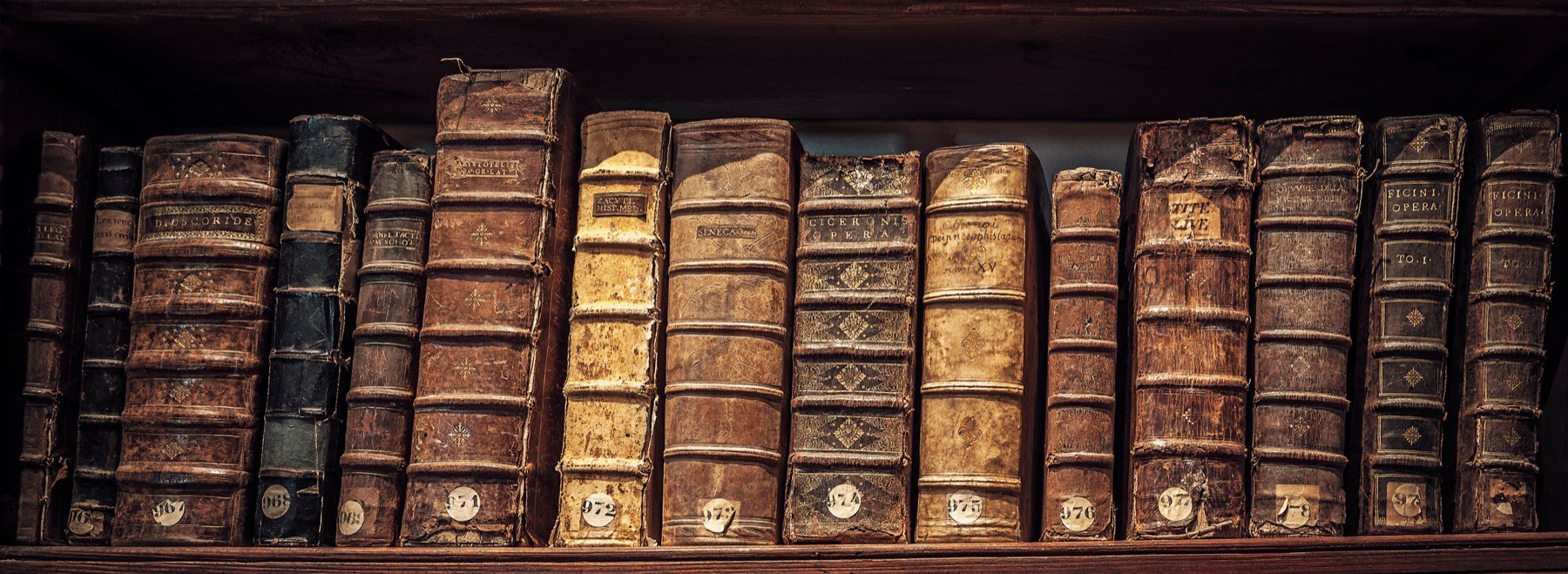
As Nicholas and I have combed through endless bookshelves in old bookstores, searched through the archive that is Ebay, and spent countless hours on Project Gutenberg we have come to realize that not all history books are created equal. To any book-loving family, that will not come as a surprise. What surprised us while reviewing a much-beloved story we were preparing for the Collection was that things were not as they seemed. Changes had been made, which were not disclosed.
Reading the original made us feel uncomfortable for sure—eyes wide open—and the question was sitting there in the middle of the room waiting for us. What do we do now? Do we keep the sanitized version, or do we publish what the author wrote?
History is not a collection of comfortable stories designed to make us feel good about ourselves or our past. It is the unvarnished record of human triumphs and failures, of brilliance and brutality, of progress and decline. To erase or deliberately dumb down that record—softening its edges, omitting its darkest chapters, rewriting it to fit modern sensibilities, or censoring the books that preserve it—is to commit a grave error against ourselves and against future generations. Even when the truth is hard or cruel, pretending it did not happen is infinitely worse. We aspire to remember history in its full complexity, and protect the books that reveal an imperfect story.
The temptation to sanitize history and literature is understandable. Confronting the horrors of slavery, totalitarian regimes, colonial exploitation, or the prejudices of earlier eras can be emotionally exhausting. Old books that refer to Native Americans as Redmen or that depict Jewish characters through ugly stereotypes make modern readers squirm. Yet the discomfort of what was written is precisely what makes it valuable. When we shield ourselves or our children from these realities by banning or censoring parts of these works, we create a false sense of moral superiority that leaves us vulnerable. As George Santayana wrote in The Life of Reason (1905),
"Those who cannot remember the past are condemned to repeat it."
Erasing history does not eliminate its consequences. The scars of past injustices persist whether we acknowledge their origins or not. By refusing to name and study those origins honestly, and by removing the very books that reveal how people once thought and spoke, we forfeit the ability to address them effectively. Ignorance does not heal wounds; it merely allows them to fester in the dark.
Consider the Holocaust and the long shadow of antisemitism. The systematic murder of six million Jews was not a vague tragedy. It grew out of centuries of poisonous tropes that appeared in literature, folklore, and popular stories. To dumb down this history, or to pull from shelves every older book that portrays Jews unfavorably, is to rob us of the evidence of how such hatred was normalized. Only by reading (or listening to) those texts in their full, uncomfortable form—and then discussing them—can we recognize similar patterns when they begin to emerge again.
The same principle applies to the portrayal of Native Americans in earlier American literature. Terms like Redmen and stories that cast Indigenous peoples as savages reflect a real "window in time." Removing every such book does not erase the attitudes that once prevailed; it only prevents us from examining them. Children who encounter these texts need adults willing to sit with them and explain the historical context: why people wrote that way then, why we reject those views now, and how language and belief have evolved. That conversation is far more powerful than silence.
Many countries across the globe have been haunted by their history with slavery. The stories feel as if one's heart is being ripped apart. But to dumb down the atrocities or to remove hurtful language is to remove the pain. We need that pain to remind us, to warn us, to keep us from repeating such hurt again.
Totalitarian experiments of the twentieth century offer further proof. When regimes rewrote history and burned books, they did so precisely to control the future. George Orwell saw it clearly:
"Who controls the past controls the future. Who controls the present controls the past."
And more chillingly,
"The most effective way to destroy people is to deny and obliterate their own understanding of their history."
Dumbing down history and sanitizing books also corrupts our sense of moral agency. If every past generation is portrayed as irredeemably evil by today's standards, and if their literature is locked away, we lose the ability to see people as products of their circumstances who still made choices. This breeds arrogance. It suggests that we alone have achieved perfect moral clarity. That delusion is itself a historical danger.
Remembering the fullness of history—and allowing children to listen to the books that record it—cultivates humility. It reminds us that civilization is fragile, that progress is reversible, and that good intentions are no guarantee against catastrophic results. There is a famous phrase with which many of us are familiar—
"The road to hell is paved with good intentions."
There is also a profound injustice to the victims themselves and to the historical record. When we sanitize suffering or delete the prejudiced texts that helped create it, we deny the full story. The enslaved person, the prisoner in the Gulag, the child in a forced labor camp, the Jewish merchant caricatured in old tales—these are not served by euphemism or absence. Their memory, and the memory of the cultures that produced those harms, demands accuracy.
The alternative—collective amnesia or willful distortion through censorship—has been tried. Societies that erase inconvenient history and literature eventually lose the ability to distinguish between myth and reality. They become susceptible to new myths, often more dangerous than the old truths they suppressed. There is more than one way to burn a book, Bradbury reminded us,
"And the world is full of people running about with lit matches."
Ultimately, the duty to remember and to keep books uncensored is not about wallowing in guilt or exposing children to hate for its own sake. It is about stewardship and conversation. We are temporary custodians of a vast human inheritance that includes both magnificent achievements and terrible hardship. To pass on only the former while quietly discarding the latter is a form of theft from those who come after us. They deserve the complete map—including the marked dangers—and the chance to discuss it with us.
Pretending history did not happen—or removing certain books quietly because they reflect a window in time we now find shameful—is an act of profound cowardice. It is the choice to trade temporary emotional comfort for the long-term survival and flourishing of our civilization. The truth may be difficult, even painful, to bear, but the alternative is far heavier: a generation raised on half-truths, unequipped to recognize old poisons when they reappear in new bottles. We must remember. We must keep reading the books (or listening to them). And we must sit with our children and talk honestly about why we believe and what we believe—why certain words and ideas once thrived, why we reject them now, and what it costs to forget.
To clarify the Paideia Collection's mission, we desire to bless families with the living books that have shaped the foundations of the Western canon, carrying forward the oral tradition of old. And yes, even the ones that make us uncomfortable. In an age when many of these rich titles are difficult to find — and some on the verge of being lost or secretly altered — our mission is to preserve them and make them accessible once again.