Years before I had ever heard the phrase "poetic knowledge," Nicholas and I felt its call innately. After much prayer and reflection, we sold our home in Indiana and set out on a life of adventure with our children. We wanted them to know the beauty of North Carolina's hills, the vast skies of South Dakota, the rugged expanses of Texas, and the golden coasts of California. We longed for them to feel the magic tingling in their toes at stories of Nessie in the loch, to walk among the castles and glens of the Scottish Highlands, and to witness the fullness of God's creation of the Masai Mara plains in Kenya.
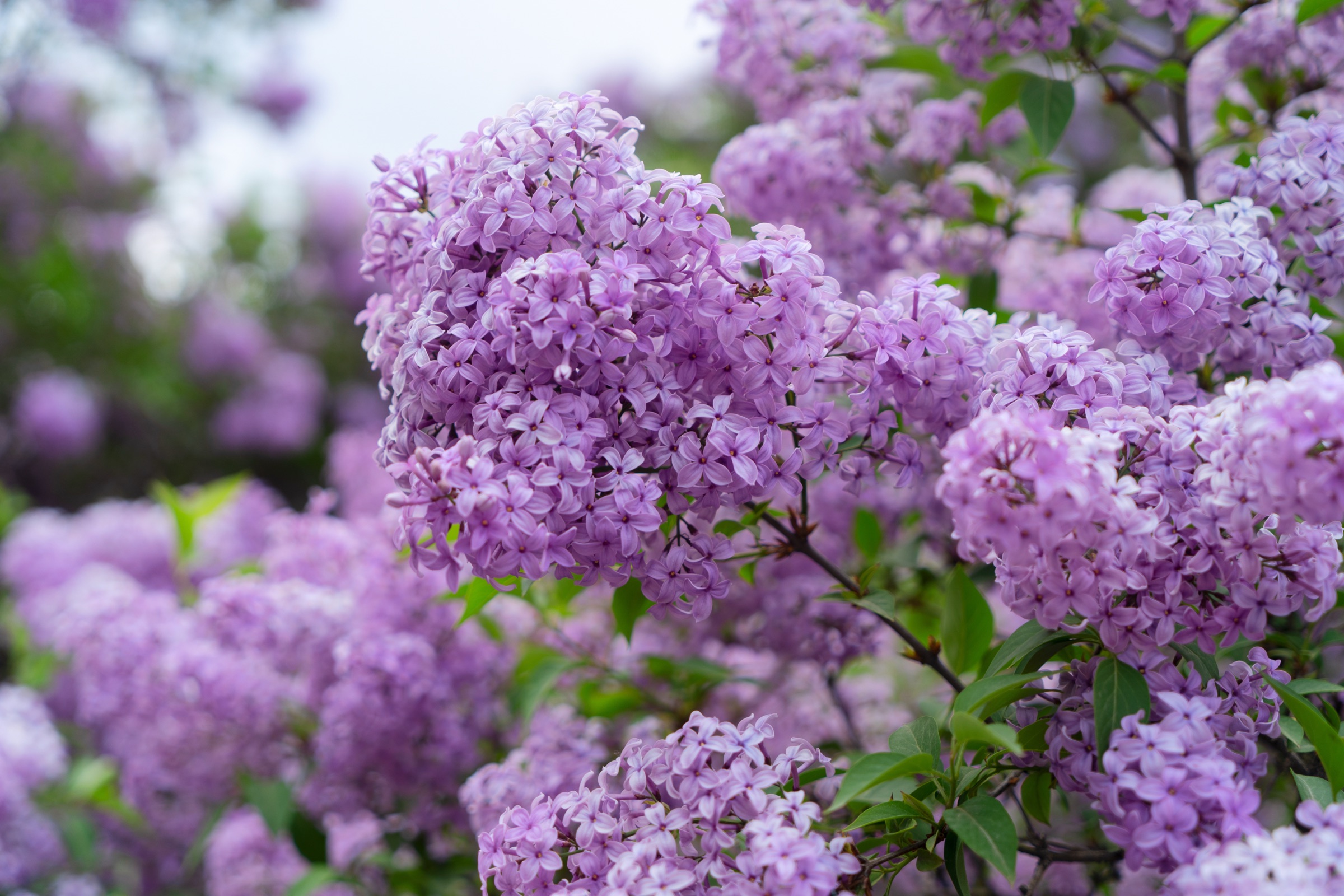
We are not suggesting that every family must sell their home and embark on such journeys to capture the full power of the poetic mode. A quiet wonder is available in smaller steps: simply stepping outside to drink in the sweet aroma of a lilac bush, or watching with delight as a dragonfly skims over a pond. The poetic mode of learning invites us to encounter the world not primarily through dissection and analysis, but through spontaneous, sensory-emotional engagement that awakens wonder.
This way of knowing is rooted in direct experience, where the heart and imagination grasp the significance of reality before the intellect breaks it down into parts. It emphasizes delight, intuition, and deep receptivity to beauty, fostering a love for what is true and good. In his seminal work Poetic Knowledge: The Recovery of Education, James S. Taylor describes this as a pre-rational encounter with reality—a sensory-emotional experience that draws us inside the thing experienced, offering knowledge from the inside out rather than from detached observation. This approach stands in sharp contrast to the dominant scientific mode of modern education, which often prioritizes measurable outcomes over lived participation.
John Senior, a profound influence on Taylor and the Integrated Humanities Program, observed that all poetry begins in delight and ends in wonder. In the poetic mode, learners are not passive recipients of facts but active participants immersed in nature, music, art, and story. This cultivates an interior view of things, in which memory and imagination synthesize experiences into a holistic understanding.
Aristotle noted that philosophy begins in wonder—a truth echoed throughout the poetic tradition. In this mode, wonder serves as the spark that ignites curiosity. Rather than rushing to categorize or critique, the learner lingers in awe: gazing at stars, listening to a melody, or feeling the texture of soil, allowing truths to reveal themselves intuitively.
The poetic mode gently opposes overly rationalized education systems that treat students as processors of information. Instead, it calls for scholé—contemplation, silence, and unhurried presence. Through real experiences such as manual work, feasting, traveling, or simply being outdoors, learners develop rightly ordered affections oriented toward the beautiful and the true. This foundation prepares the ground for later analytical study.
Taylor emphasizes that poetic knowledge is not merely about poetry as a literary form but a broader way of being in the world. It is synthetic and penetrating, engaging the whole person—senses, emotions, and intellect—in unity. This mode recovers what modern education often loses: the joy of discovery and the personal resonance with reality. In Chapter 1 of his book, he writes:
"Poetic experience indicates an encounter with reality that is nonanalytical, something that is perceived as beautiful, awful (awe-full), spontaneous, mysterious. It is true that poetic experience has the surprise of metaphor found in poetry, but also found in common experience, when the mind, through the senses and emotions, sees in delight, or even in terror, the significance of what is really there."
James S. Taylor, Poetic Knowledge
In practice, the poetic mode thrives on formative literature, music, and the arts long before abstract analysis. Children and adults alike are shaped by the good and pleasing books they read, which nourish the imagination. These encounters build a rich reservoir of poetic knowledge that makes all subsequent learning more alive and meaningful. That is one reason why picture study is so powerful: to simply study every inch of a painting, to take in all the nuance a piece has to offer. Never again will that painting be just a painting to you—it almost becomes yours.
St. Thomas Aquinas spoke of poetica scientia as the immediate apprehension of reality that inspires awe. A child comes to know a flower not merely by its botanical parts but by its beauty and goodness within God's creation—first speaking to the heart.
Music and rhythm play vital roles as well. Through song and harmony, learners experience a universal language that transcends words. By first loving what is lovely through sensory and emotional encounters, students develop the right affections. This foundation prevents education from becoming lifeless and transforms the entire day—chores, nature walks, liturgy, and family life—into opportunities to encounter the good, the true, and the beautiful.
Critics of modern education rightly note that an overemphasis on analysis can stifle wonder. The poetic mode offers a remedy through receptivity and delight. C.S. Lewis warned against reducing education to mere information processing, urging instead an approach that guards the heart's imaginative capacities against utilitarian reductionism.
In this mode, parents act as guides, drawing out ideas through shared experiences rather than imposing dry lectures. We invite our children to look deeply—at stars, at stories, at the ordinary—perceiving deeper realities and building a synthetic imagination.
Ultimately, the poetic mode of learning is a healing balm for our fragmented age. It calls families and educators to relearn how to be poetic beings: open to mystery, attuned to beauty, and joyfully participatory in the world. As we cultivate this way of knowing, we recover a classical vision of education in which wonder leads to wisdom. James S. Taylor's insights remind us that true knowing begins in delight, inviting each learner to embrace reality with open senses and a receptive heart—nourishing the soul as much as the mind.