Fyodor Dostoevsky wrote one of the most enigmatic lines in all of literature:
Beauty will save the world.
What a haunting thought. Rolling this sentence over and over again in one's mind — each time, the meaning goes deeper.
Dostoevsky didn't mean charming. He didn't mean pretty. He meant the kind of beauty that makes you lean closer, that takes your breath away, that opens something in you before a single word is spoken.
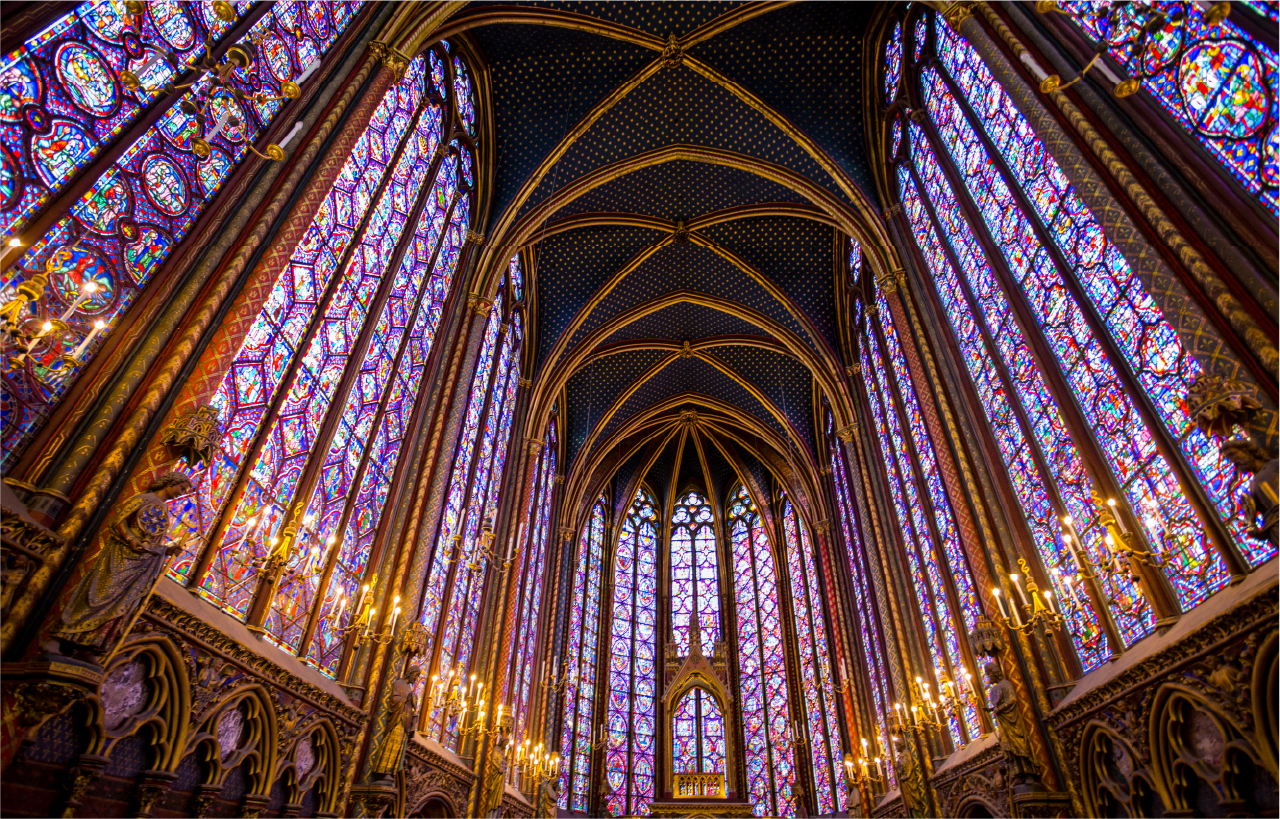
We all know this to be true in our own lives — the moment you catch the reflection of light pouring through a thousand panes of stained glass in a quiet cathedral, or hear the first measures of Beethoven's Symphony No. 9, or delight in the first few flakes of snow falling to the hardened ground. Your soul rejoices in the beauty.
Beauty awakens the soul to something greater than itself, a quiet summons that cuts through the noise of daily existence. In a world that often reduces us to utility and endless to-do lists, beauty refuses to be measured or owned. It arrives uninvited — and in that moment, we remember we are more than bodies moving through tasks. It reminds us of transcendence, of a realm where meaning is not invented but discovered. Without this encounter with beauty, life flattens into mere survival; with it, even suffering gains dignity, for beauty whispers that there is still something worth revering.
Beauty binds us to one another in unspoken communion. Even a loud and boisterous group on the seashore comes to a shared silence when witnessing a beautiful sunset, drawing them into the same reverent pause. No words are needed; the experience itself creates fellowship.
In an age of division, beauty offers a neutral ground where egos are softened and defenses drop. It does not argue or persuade — it simply reveals, and in that revelation, we glimpse the shared longing of every human heart. The child who stares wide-eyed at fireworks, the elder who weeps quietly at a familiar hymn, the young person who holds their breath when a ladybug lands on their finger — these are not isolated events but threads in the same tapestry. Beauty knits the solitary self back into humanity.
Beauty heals what logic alone cannot touch. When words fail and reason reaches its limit — after loss, betrayal, or the slow erosion of hope — beauty steps in as a balm. It does not explain suffering away; it accompanies it, dignifying the pain by refusing to let it be the final note. Think of how a single poem read in the dark can steady a trembling spirit, how the scent of rain can coax a forgotten joy, or the taste of fresh baked bread just out of the oven brings life back into a tired soul. Beauty does not erase wounds, but it reorients them, turning the gaze outward toward something enduring. In its presence, despair loses its monopoly; a quiet possibility emerges that redemption is possible.
Beauty trains the heart in wonder — that rare and childlike posture essential to wisdom. Wonder is the opposite of cynicism; it is the willingness to be astonished, to stand before mystery without demanding immediate answers. Beauty cultivates this capacity by confronting us with excellence that exceeds explanation: the intricate spiral of a seashell, the effortless grace of a dancer, the mathematical perfection hidden in a Bach fugue. Each encounter enlarges the soul, making room for humility and gratitude. A person starved of beauty grows armored and small, seeing only utility or threat; but one nourished by it remains open, capable of seeing the sacred in the seemingly mundane. Ralph Waldo Emerson once wrote:
"Never lose an opportunity of seeing anything beautiful, for beauty is God's handwriting."
Ralph Waldo Emerson
Beauty inspires paideia without coercion. True beauty draws us toward the good not through guilt or command, but through desire and atmosphere. When we behold something radiant, we long to become worthy of it. The sight of selfless courage in another, the purity of an act of forgiveness, the integrity of a life lived with quiet honor — these move us more powerfully than any lecture. Beauty incarnates the ideal, making goodness attractive rather than obligatory. In doing so, it gently reforms us from within, aligning our wills with what is highest without ever raising its voice.
As the Apostle Paul wrote in Philippians:
"Finally, brethren, whatsoever things are true, whatsoever things are honest, whatsoever things are just, whatsoever things are pure, whatsoever things are lovely, whatsoever things are of good report, if there be any virtue and if there be any praise, think on these things."
Philippians 4:8
Finally, beauty testifies to the possibility of resurrection in a broken world. Dostoevsky's haunting line is not naive optimism; it is a defiant hope rooted in the belief that what is most real is not decay or cruelty, but the eternal loveliness that persists despite them. Beauty endures — through wars, through grief, through the long nights — and in its persistence, it promises that the story is not yet finished. When we lean closer to Monet's water lilies shimmering with light, when Tchaikovsky's cannon thunder triumphs over chaos, when spring's first crocus opens defiant against winter, we touch something unconquerable.
Beauty does not merely decorate existence; it redeems it, reminding us that the world, though wounded, is still capable of being saved. Beauty is not ornament — it is argument. It does not persuade the mind; it ambushes the soul. A child who grows up surrounded by beautiful things — beautiful language, beautiful music, beautiful images made with care — is being formed whether or not anyone calls it education.
It is paideia.